All businesses today must deal with increasing digital security threats because of improved internet connectivity. Organizations that handle customer data need to understand common cyber threats because it serves as their essential duty. All organizations, from small businesses to major corporations, need to protect themselves.
Did you know? Around 74% of organisations experienced at least one cyber attack in the past year, and 85% of breaches involve human error, making security training and awareness essential.
Our team at Singular Security helps businesses every day by conducting risk assessments, building security measures, and developing strategies to counter new security threats. Business owners and IT managers need to learn about common cyber threats to businesses before they can create effective security systems. Let us dive in.
Key Takeaways
- Cyber threats continuously develop, which creates risks for businesses that operate at any size.
- Security breaches most frequently occur because employees make mistakes or fail to understand security protocols.
- Organizations need to implement various security measures which include MFA and encryption, and network segmentation, to achieve effective cybersecurity protection.
- The combination of vulnerability assessments with incident response planning creates proactive security measures that help to minimize damage.
- Organizations need to establish ongoing monitoring processes together with system updates and specialist support to achieve cyber resilience.
The 7 Common Cyber Threats Every Business Must Know
1. Phishing Attacks
Phishing attacks represent a major cyber threat that businesses worldwide face as their most common security risk. Attackers send deceptive emails that appear to come from trusted sources — banks, colleagues, or software vendors — tricking employees into clicking malicious links or revealing sensitive credentials.
- Spear phishing targets specific individuals within an organisation
- Business email compromise (BEC) impersonates executives to authorise fraudulent payments
- Smishing uses SMS messages to lure victims to fake websites
2. Ransomware
Ransomware functions as a malware category that enables hackers to encrypt all files belonging to their victims and then demand a ransom payment to restore access to those files.
- For bigger organisations, ransomware demands now average more than one million dollars.
- Double extortion tactics now involve threatening to publish stolen data publicly.
- Ransomware-as-a-Service (RaaS) has lowered the barrier for criminal activities because it provides cybercriminals with easy access to its services.
3. Insider Threats
The organization faces threats from both internal and external sources. Disgruntled employees, through their actions and their accounts, which third parties have compromised, present an internal threat that can inflict serious damage on the organization.
- The occurrence of accidental data breaches happens more frequently than people expect because of staff members who fail to handle data properly.
- Malicious insiders use their access to company data for personal theft of intellectual property and customer information.
- The system access that third-party vendors possess creates a potential danger because they serve as internal threats.
4. Distributed Denial-of-Service (DDoS) Attacks
The DDoS attack brings excessive traffic to a company’s servers and network, which leads to system failures and accessibility problems. E-commerce businesses and service providers experience major financial and reputation damage because their operations require constant availability.
- The attackers use botnets, which consist of hacked devices, to execute their attacks
- Amplification attacks use misconfigured servers to create increased traffic streams
- DDoS attacks serve as a distraction method, which attackers use to execute two different types of breaches at the same time
5. SQL Injection and Web Application Attacks
Web applications represent a major attack target. SQL injection attacks use code flaws in a website to gain unauthorized access to its backend databases, which results in the potential disclosure of customer information, passwords, and financial records. The two attack vectors, cross-site scripting (XSS) and cross-site request forgery (CSRF), share a close relationship with each other.
- The most common entry point for attackers comes from poorly designed web forms.
- Attackers have the ability to access all database data, which includes both retrieval, modification, and deletion.
- Automated scanning tools enable hackers with minimal skills to discover system vulnerabilities.
6. Man-in-the-Middle (MitM) Attacks
The criminal who operates a MitM attack secretly intercepts and modifies the communication between two parties, which includes an employee and a company server. The attacks demonstrate higher occurrence rates on public Wi-Fi networks, which lack security features, thus making remote workers more vulnerable.
- Attackers use session hijacking to take on the identity of real system users
- SSL stripping converts secure HTTPS connections into unprotected HTTP connections
- ARP spoofing enables attackers to control network traffic by making devices send data through their system
7. Zero-Day Exploits
The software vulnerability exists because hackers exploit software defects that remain unpatched by the software vendor. These cyber threats rank as highly dangerous because attackers can launch their attacks without any available protection methods.
- Nation-state actors and sophisticated criminal groups frequently deploy zero-day exploits
- Dark web marketplaces operate as platforms where buyers and sellers exchange zero-day vulnerabilities.
- Zero-day attacks can compromise well-secured systems when hackers launch their attacks against software that multiple users rely on.
Common Cyber Threats and How to Avoid Them?

The process of learning about common cyber threats requires the development of effective security methods, which need more than basic knowledge. The following framework provides businesses of different sizes with an effective method to use.
- Security Awareness Training: Your employees represent your most valuable resource while they create your greatest security risk. The organization needs to conduct regular training sessions that cover current information because human errors account for most successful cyberattacks.
- Multi-Factor Authentication (MFA): The requirement of two verification methods decreases the risks associated with credential theft. The organization must implement MFA for all critical business systems without any exceptions.
- Regular Vulnerability Assessments: The organization should conduct penetration tests and vulnerability scans on a regular basis to find security weaknesses before hackers use them. The proactive security method costs less than emergency response measures.
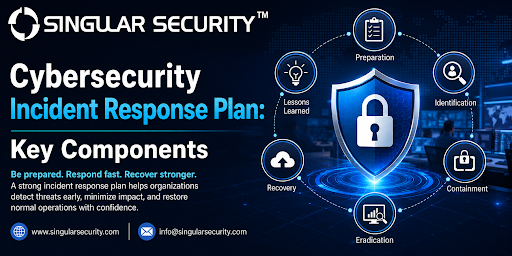
- Incident Response Planning: Businesses need to establish procedures to follow when security breaches occur because this will help them manage outages and protect their assets. Your response plan needs documentation, which requires regular testing and distribution of responsibilities to all essential stakeholders.
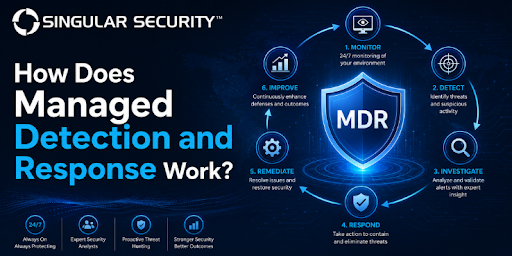
- Endpoint Protection and Monitoring: Every network device functions as an access point to the system. The organization should purchase advanced EDR solutions that protect its system by stopping threats before they develop into larger problems.
Organizations that need to evaluate their current security level should consider using cyber security consulting services because these experts will assess their existing security status. The experts will create a customized security improvement plan that aligns with their industry requirements, business size, and specific security risks.
How to Prevent Common Cyber Threats?
The process of preventing common cyber threats requires continuous effort because it demands regular training. Organizations achieve cyber resilience through their implementation of multiple security layers, together with their execution of security protocols and their establishment of security awareness among all employees.
The fundamental components that establish permanent cyber resilience include the following elements:
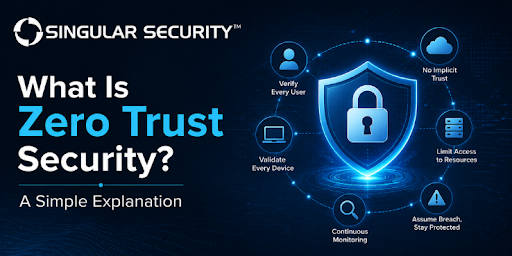
- Zero-Trust Security Model: The system requires continuous verification of all users and devices, and connections, regardless of their location at the network boundary or within the network perimeter.
- Data Encryption: Organizations must protect their sensitive data by implementing encryption methods to safeguard the data during its storage and transmission. The encrypted data becomes useless to attackers who access it because they lack the necessary keys to decrypt it.
- Network Segmentation: You should create separate network sections, which will stop security breaches from spreading to your complete system.
- Cloud Security Best Practices: The security of cloud environments faces challenges because organizations shift their operations to cloud-based systems, which result in data breaches that occur from improperly configured cloud storage and identity access management policies. Organizations must conduct audits of their cloud settings on a regular basis.
- Compliance and Regulatory Alignment: Organizations must follow all applicable regulatory standards, which include ISO 27001, GDPR, and specific industry standards. The security baseline established through compliance does not ensure complete protection, but it presents essential security protocols.
Common Cyber Threats and How to Avoid Them: Industry-Specific Risks
Different industries face different versions of common cyber threats and how to avoid them. The healthcare sector deals with unique security challenges because it needs to protect patient information and safeguard medical devices. The specific threat landscape that affects your business sector needs to be understood.
- Hospitals’ main concern about cybersecurity involves ransomware attacks, which target both patient records and medical devices that hospitals connect to their networks. Hospitals become prime targets for cybercriminals because attackers want to access the vital information hospitals maintain.
- Finance and Banking: Cybercriminals use credential theft to commit fraud while companies struggle to comply with regulatory requirements. Security threats from state-sponsored groups that use advanced persistent threats (APTs) pose major challenges to organizations.
- Retail and E-Commerce: The most serious threats businesses face involve payment card data theft through skimming malware and DDoS attacks during high sales times and supply chain attacks that target third-party plugins.
- Manufacturing and Critical Infrastructure: Attackers have started to focus on industrial control systems (ICS) and operational technology (OT) networks because they want to interrupt physical operations.
Stay Ahead of Common Cyber Threats
The digital landscape presents extraordinary opportunities, but it also carries very real risks. The common cyber threats outlined in this guide.
Are you prepared to advance your business security measures? Singular Security provides complete assessments and customized security roadmaps and continuous support to assist businesses from various sectors in maintaining security throughout fast-evolving threat landscapes.
Also Read This Blog:-
Common Signs Your Business Needs a Cyber Security MSP Immediately
Frequently Asked Question
Q1. What are the most common cyber threats for businesses?
The most common cyber threats for businesses include phishing and ransomware and insider threats and DDoS attacks and web application attacks and MitM attacks and zero-day exploits.
Q2. Why are phishing attacks so dangerous?
The attacks use human error as a vulnerability because they manipulate employees into sharing their login information and opening dangerous links.
Q3. How can businesses prevent ransomware attacks?
Organizations can prevent ransomware attacks through their implementation of backup systems and their deployment of endpoint security solutions and their provision of employee security education and their establishment of security updates for software programs.
Q4. What is the biggest internal cybersecurity risk?
Insider threats from malicious employees and accidental data breaches represent the biggest cybersecurity risk that organizations face.
Q5. Do small businesses need cybersecurity consulting services?
Yes, small businesses are frequent targets and benefit from expert risk assessments and tailored security strategies.