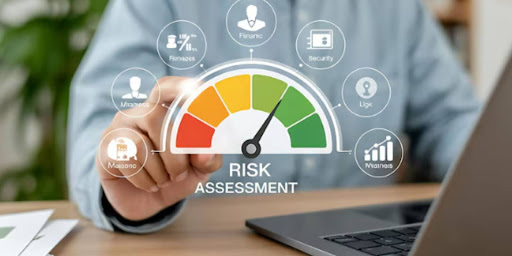
In today’s evolving regulatory landscape, organizations that fail to understand what is a compliance risk assessment, often find themselves exposed to financial penalties, reputational damage, and operational disruption. A well-structured compliance risk assessment process helps businesses proactively identify vulnerabilities, measure their severity, and implement the right controls before regulators or adversaries do.
“Did you know? A large majority (about 93%) of organisations worldwide say that their compliance teams are actively involved in risk assessment and management, showing just how central compliance risk assessments have become to business operations today.”
Key Takeaways
- The compliance risk assessment process provides organizations with their existing regulatory and legal requirements and internal policy obligations.
- The system decreases the possibility of financial penalties, data breaches, and damage to reputation.
- The procedure consists of the following steps, which include asset identification and control evaluation, risk scoring, and remediation planning.
- The regulatory compliance risk assessment process evaluates organizational compliance with standards, including HIPAA, NIST, SOC 2, and PCI-DSS.
- The organization implements continuous monitoring to establish compliance requirements as permanent operational duties that extend beyond initial audit assessments.
At Singular Security, we’ve built our entire platform and services around making this process not only achievable but sustainable, from continuous monitoring to a fully managed vCISO program.
1. What Is a Compliance Risk Assessment and Why Does It Matter?
Understanding what is a compliance risk assessment, is the foundation of any strong cybersecurity program. At its core, a Compliance Risk Assessment is a structured evaluation that identifies where your organization may fall short of legal, regulatory, or internal standards, and what that exposure costs you. Singular Security’s Compliance Readiness service delivers exactly this kind of structured visibility, helping organizations across healthcare, finance, and federal sectors turn compliance gaps into actionable security improvements. When you know how to assess compliance risk correctly, you’re no longer reacting to audits; you’re ahead of them.
- Singular Security’s Compliance Readiness service maps your obligations across HIPAA, NIST, and GLBA frameworks.
- Our vCISO program provides executive-level guidance on how to assess compliance risk for your industry.
- Singular platform centralizes your compliance posture into one real-time dashboard for complete visibility.
- Automated framework crosswalks within Singular reduce redundant audit preparation work by hours.
- Compliance Risk Assessment conducted through our platform directly supports ISM program compliance requirements.

2. How to Conduct a Compliance Risk Assessment Using Singular Security
The execution of compliance risk assessment requires people to understand its implementation procedures. The process requires identification of assets together with the development of regulation maps, evaluation of control deficiencies, determination of risk levels, and the establishment of remediation priorities. Singular Security uses established security frameworks that follow NIST standards to create an approach that delivers repeated results that organizations can defend during audits. Organizations that lack sufficient internal IT staff can implement our managed and hybrid service models to perform a complete compliance risk assessment process without straining their existing resources.
- The Compliance Readiness service begins with a complete inventory of assets and data that matches the regulatory requirements.
- Singular Security develops its NIST-aligned framework to determine control deficiencies while establishing high-importance areas for remediation.
- The vCISO team uses tabletop exercises together with IR planning to create realistic compliance breach scenarios, which help organizations prepare for actual incidents.
- The Policy and Procedure Development service helps you create documented controls that match all phases of your risk assessment process.
- The automated crosswalks of Singular simplify the procedure for conducting compliance risk assessments, which involves multiple frameworks.
3. Regulatory Compliance Risk Assessment: Meeting Standards Without the Guesswork
The regulatory compliance risk assessment process requires security assessment procedures that need to match external requirements from HIPAA, CMMC, SOC 2, and PCI-DSS security standards. Organizations face audit findings and monetary penalties, which can lead to losing their business contracts when they fail to comply with this requirement. The Compliance Risk Assessment services from Singular Security provide governance, risk, and compliance GRC services through all main regulatory frameworks.
Our 24×7 SOC continuous monitoring system performs real-time compliance checks, which show that your compliance status changes throughout the day. The security analysts at our company make regulatory compliance risk assessment into an ongoing process, which needs to continue throughout the whole year instead of completing it once.
- The company provides GRC audit and certification support, which meets HIPAA, CMMC, SOC 2, and PCI-DSS requirements through its GRC audit and certification services.
- The 24×7 SOC team of our organization conducts ongoing verification of regulatory controls, which enables them to detect control deviations before these issues develop into audit problems.
- Identity and Access Management services enforce least-privilege access, which serves as an essential security measure for evaluating regulatory compliance risks.
- Security Awareness Training protects organizations from human-related regulatory risks by teaching employees how to handle data and recognize phishing attacks.
- Our vCISO roadmap process establishes operational compliance milestones that prioritize complex regulatory requirements into manageable steps.

4. Choosing the Right Compliance Risk Assessment Tool for Ongoing Mitigation
The assessment tool used for compliance risk evaluation determines whether an organization conducts regular security assessments or only performs security assessments at specific times. The Singular platform is Singular Security’s purpose-built compliance risk assessment tool that provides real-time visibility, automated crosswalks between frameworks, and centralized policy management — all in one place. The Singular system provides users with a better solution than point-in-time solutions because it evolves with both regulatory changes and business expansion. Organizations achieve full visibility of their compliance risk assessment operations through our combined managed Continuous Monitoring and Advanced Threat Protection solutions, which function inside their actual work environments.
- Singular is Singular Security’s flagship compliance risk assessment tool with real-time compliance posture dashboards.
- Singular includes automated framework crosswalks, which help users complete their work across HIPAA, NIST, and GLBA requirements without doing extra tasks.
- The integrated EDR/XDR/MDR endpoint security solutions supply real-time threat information, which proceeds directly into your Compliance Risk Assessment process.
- The Continuous Monitoring service provides your compliance risk assessment process with current operational risk information instead of using outdated data.
- The hybrid managed model enables internal teams to share ownership of the tool while Singular Security analysts maintain constant verification of their discoveries.
Ready to Strengthen Your Compliance Risk Assessment Process?
A proactive compliance risk assessment process is no longer optional because it serves as the essential framework that supports a security program that wins contracts through its ability to withstand challenges. Singular Security Inc. provides organizations with a complete solution, which includes its platform, expert staff, and established methods for organizations that want to develop their security systems from basic beginnings to advanced capabilities.
Our compliance risk assessment tool, our 24×7 security operations center, and virtual chief information security officer service all work together to help clients achieve better regulatory compliance outcomes while building trust in their security stance.
Also Read this Blog:-
Frequently Asked Questions
Q1. What is a compliance risk assessment?
A compliance risk assessment identifies and analyzes and ranks regulatory and legal and internal policy compliance risks through its structured assessment process. The assessment enables organizations to identify their non-compliant areas and determine the necessary steps for compliance correction.
Q2. Why is a compliance risk assessment important for businesses?
The process matters because organizations that fail to comply with regulatory demands face financial penalties and legal outcomes, audit failures, and damage to their public image. Organizations can discover compliance deficiencies through proper assessment methods, which enable them to resolve issues before they escalate into critical matters.
Q3. How do you assess compliance risk effectively?
The assessment process begins when businesses create a regulatory database, which includes their existing assets and sensitive information, while they evaluate their current control mechanisms and identify security holes to fix with their most dangerous operations. The organization must conduct ongoing monitoring activities because it needs to verify that its control mechanisms operate properly during all future periods.
Q4. What is the difference between a compliance risk assessment and a regulatory compliance risk assessment?
The process of compliance risk assessment includes the assessment of all internal policy compliance and external standard compliance. The evaluation process concentrates on determining whether organizations comply with mandatory regulations, which include HIPAA, NIST SOC 2, CMMC, and PCI-DSS standards.
Q5. How often should a compliance risk assessment be conducted?
The majority of organizations conduct their complete assessments on an annual basis. Organizations should implement annual assessments together with ongoing monitoring because this method enables them to maintain compliance with evolving regulatory standards and changing business conditions.